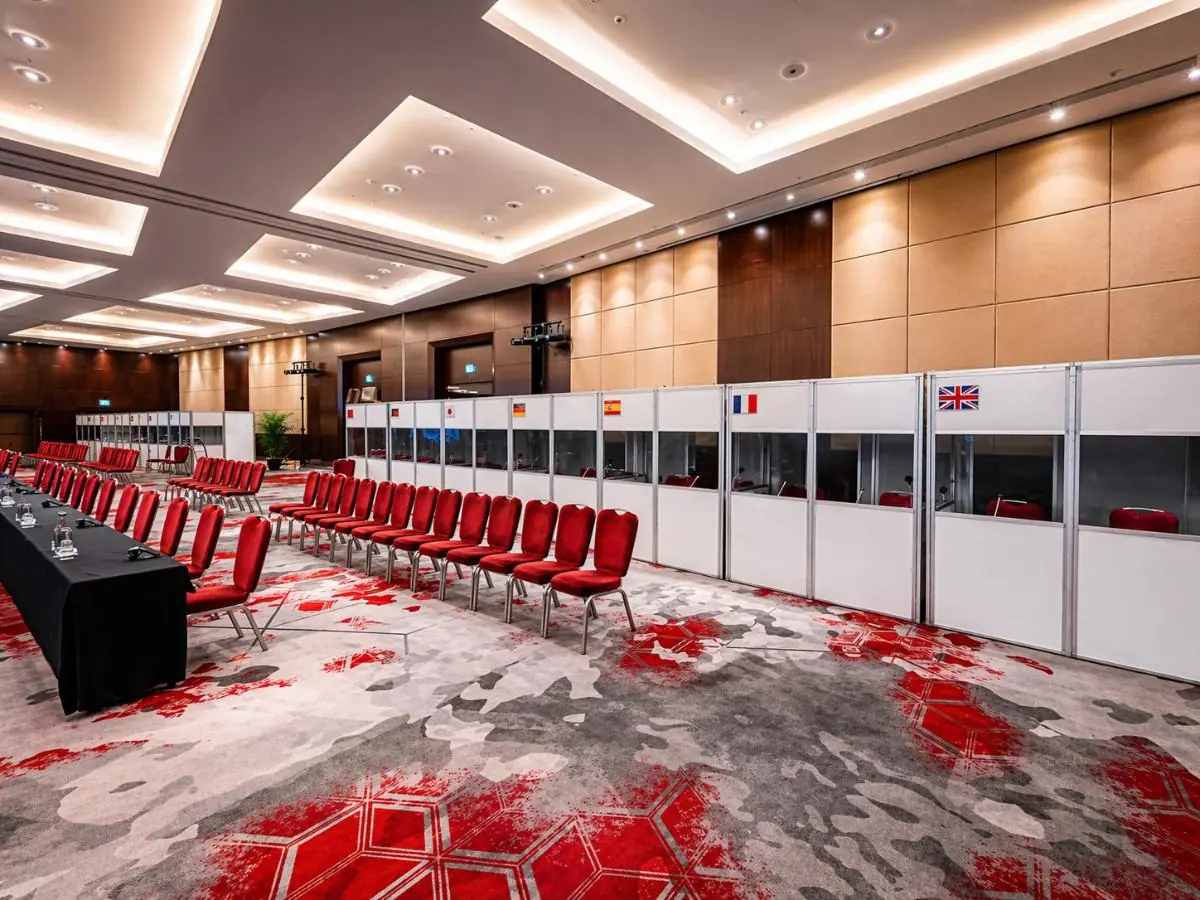
An organisation operating from several offices, regions or countries has the standard meetings problem in a particular shape. Each location has its own relationships with venues near it, and knows which rooms are the size advertised and which supplier answers the phone on a Friday afternoon.
That knowledge is real. It is not sentiment and it is not resistance to change. It is operational information held nowhere but in the heads of the people who booked those venues before.
Meanwhile the organisation buys the same categories in several places at once without ever presenting itself to a supplier as one customer. Both things are true at once, which is why heavy-handed answers to meetings procurement across sites fail so reliably.
Why central mandates fail across geographies
The instinctive fix is to appoint one central function, select preferred venues and require every office to use them. It fails for practical rather than political reasons.
- The central list cannot cover every location. A programme built around the head-office city is useless 200 miles away, and using it anyway means travel costs exceeding any rate benefit.
- Central teams do not know local constraints. Parking, transport, the building works next door, the "boardroom" that seats eight rather than twelve.
- Response times get worse first. A booker who could confirm a room in an hour now waits on a central team in another time zone, and concludes the process has made their job harder.
- Compliance becomes nominal. Offices book locally anyway and code the spend elsewhere, removing the visibility the mandate was meant to create.
- Local supplier relationships lapse. Terms built over years with a venue that flexes on cancellation are not easily recovered once the relationship goes quiet.
The hybrid model: central framework, local execution
The arrangement that holds across geographies separates framework from execution. The framework is common to every office; execution stays where the knowledge is.
Policy and scope
- Held centrally
- One policy defining scope and what must be recorded.
- Held locally
- Interpretation for local meeting types, within it.
Approval thresholds
- Held centrally
- The threshold structure and who signs at each level.
- Held locally
- Authorisation within local delegated limits.
Data standard
- Held centrally
- The field set recorded for every meeting, identical everywhere.
- Held locally
- Entry at the point of booking.
Supplier terms
- Held centrally
- Contract standards, cancellation and attrition positions, payment terms.
- Held locally
- Which venue to use, and the relationship with it.
Sourcing
- Held centrally
- Support for large or unfamiliar requirements and new locations.
- Held locally
- Day-to-day sourcing where local knowledge decides.
Reporting
- Held centrally
- Consolidated portfolio view across all sites.
- Held locally
- A local view of their own activity, from the same data.
| Element | Held centrally | Held locally |
|---|---|---|
| Policy and scope | One policy defining scope and what must be recorded. | Interpretation for local meeting types, within it. |
| Approval thresholds | The threshold structure and who signs at each level. | Authorisation within local delegated limits. |
| Data standard | The field set recorded for every meeting, identical everywhere. | Entry at the point of booking. |
| Supplier terms | Contract standards, cancellation and attrition positions, payment terms. | Which venue to use, and the relationship with it. |
| Sourcing | Support for large or unfamiliar requirements and new locations. | Day-to-day sourcing where local knowledge decides. |
| Reporting | Consolidated portfolio view across all sites. | A local view of their own activity, from the same data. |
Read down the central column and it is mostly standards, not decisions. That is the point: a common data standard and contract position produce a consolidated view and a consistent commercial floor without anyone centrally choosing a meeting room in a city they have never visited. See meetings governance and centralising meetings and events.
Regional preferred supplier arrangements
A single national or global preferred list rarely works across a dispersed organisation. Regional arrangements do — a small set of agreed venues per region or major city, negotiated against the volume that region generates, on common contractual terms.
That keeps the commercial benefit without pretending geography does not exist, and gives local teams a reason to use the list: the venues on it are ones they would plausibly have chosen anyway, now on better terms. Where volume is genuinely low, a formal arrangement is not worth negotiating — handle those ad hoc against the standard position. See preferred venue programme and supplier management.
Currency, VAT and cross-border contracting
Once offices sit in different countries, several complications arrive attached to meetings without being meetings problems.
- Currency. Commitments made in one currency and reported in another move between contract and settlement. Whether to manage that exposure is a treasury question; reporting must at least be clear which figure it shows.
- VAT and indirect tax. Recovery on accommodation, catering and venue hire varies by jurisdiction and event type, which affects cost comparisons between locations.
- Contracting entity. Which group company contracts with the venue affects liability, tax and payment routing — not a decision for whoever is organising.
- Local terms. Cancellation and deposit expectations differ by market, and a position drafted for one jurisdiction may be unenforceable in another.
- Data protection. Delegate data crossing borders carries obligations depending on the jurisdictions involved.
Consolidating requirements sites cannot see
The most consistently recoverable value in a multi-site organisation comes from requirements that are similar, close together in time, and invisible to each other.
A hypothetical illustration: three offices each run a two-day training event for thirty people in the same quarter, two in the same city, sourced separately at different rates. Nobody did anything wrong. The organisation simply never had the chance to present the three as one.
A consolidated forward view creates that chance. Not a mandate or an approval gate — a shared calendar of known requirements far enough ahead to act on, built from a common data standard and dependent on meetings spend visibility existing first.
Time zones and language
Where offices are genuinely international, two realities have to be designed around rather than wished away.
Response time decides whether a central route gets used. A booker eight hours ahead who waits overnight for a reply will stop sending requirements through it, and no policy changes that. Either coverage matches the operating hours that matter, or the local team keeps authority to act and reports afterwards.
Language matters for the same reason. A form or policy existing in one language only will be worked around elsewhere. Keeping the mandatory elements short makes them translatable without becoming a project.
Frequently asked questions
01Should we appoint one central meetings owner or one per office?
Both, in different roles. A central owner holds the framework, data standard and reporting; each office needs a named local contact. Having only the first leaves nobody accountable for the activity itself.
02Our offices insist their local venues are better. Are they right?
Frequently, on quality and suitability. They are less right about price, having only ever negotiated as one office rather than as part of a larger buyer. A regional arrangement with the venues they already prefer resolves it without an argument.
03Do all offices need to use the same booking route?
They need the same data standard. Whether a requirement arrives centrally or is handled locally and recorded centrally matters far less than whether the same fields come out of it. Insisting on one route where response times make it impractical trades adoption for nominal consistency.
04What about duty of care across sites?
One of the strongest arguments for consolidation. If an incident occurs, the organisation needs to know who is there and how to reach them, and that answer cannot live only with a local organiser — see duty of care.
05We are multi-site but all in one country. Does that simplify things?
Considerably. Currency, VAT and cross-border contracting drop away, leaving the tension between local knowledge and central position. If the fragmentation is about departments rather than distance, decentralised meetings management is the closer fit.
Related reading
- 01GuideCentralising meetings and eventsWhat benefits from being centralised, and what does not.
- 02The mechanismPreferred venue programmeRegional arrangements built on the volume each region generates.
- 03Structure and behaviourDecentralised meetings managementThe same fragmentation, driven by structure rather than geography.
- 04VisibilityMeetings spend visibilityThe consolidated view cross-site consolidation depends on.