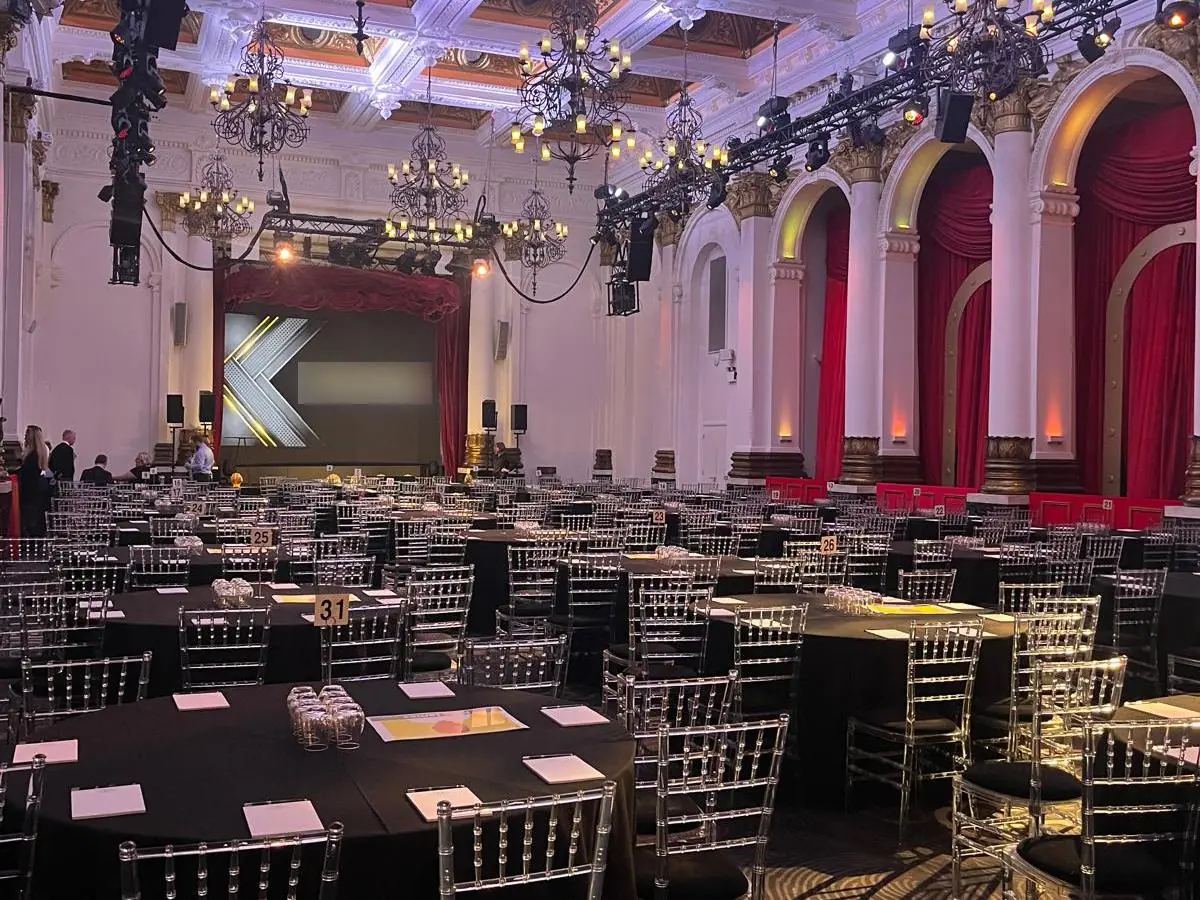
Venue procurement is the part of the meetings category where a well-run process reliably produces a different commercial outcome from a badly-run one. The market is fragmented, pricing is discretionary, and almost every venue has more room to move on terms than on rate.
This page covers the mechanics: writing a brief that can be priced, approaching the market, structuring the request, normalising offers that arrive in incompatible formats, and negotiating the terms that determine what you actually pay. The wider category discipline sits on meetings procurement.
The brief determines the outcome
A venue cannot quote competitively against a requirement it does not understand, and will not quote generously against one that looks vague. Vagueness reads as a speculative enquiry or an inexperienced buyer, and both attract the standard rate card.
A brief that produces useful responses states dates and date flexibility, delegate numbers with a realistic range, location and transport parameters, room configuration and breakouts, catering standard, accommodation by night, technical requirement, accessibility requirements and the decision timeline.
It should also state what is flexible. A venue that knows you can move from a Tuesday to a Thursday, or March to June, has something to work with. One that believes the date is fixed has no reason to discount.
Approaching the market
How wide to go is a judgement about lead time and availability, not a rule. On a well-supplied date in a large city, six to eight venues gives real choice. On a peak date in a constrained market you may have three genuine options, and the exercise is about securing one at sensible terms rather than running a beauty parade.
Where a preferred venue programme exists, approach the preferred estate first and go wider when it cannot serve the requirement — recording the failure, because repeated failures are evidence the list needs refreshing.
Going direct versus through an agency changes the mechanics rather than the principles. Agencies hold rate history and relationships and can cover a market quickly; the commercial arrangement behind that, including commission, should be transparent to you. Ours is set out on how we work.
Structuring the request
A venue RFP does not need to be long. It needs to be structured so responses can be compared without rebuilding them. The most useful discipline is dictating the response format rather than accepting the venue’s template.
Ask for the rate broken down — room hire, catering by element, accommodation by night, AV, service charge — rather than as one per-head figure. Ask explicitly for the cancellation scale, attrition allowance, complimentary ratios, payment terms and release dates in the proposal rather than at contract stage. Terms that appear for the first time in the contract are terms you did not negotiate.
Day delegate, 24-hour and bedroom-only
- Day delegate rate (DDR) — a per-person, per-day figure typically covering main room hire, refreshments, lunch and basic equipment. What is included varies materially, so two DDRs are rarely the same product.
- 24-hour rate — a DDR plus dinner, accommodation and breakfast. Convenient for residential events, but it bundles the bedroom element, making it harder to see whether the accommodation rate is competitive in isolation.
- Room hire plus consumption — hire charged separately, catering and extras on actual usage. More transparent, and often cheaper where numbers are modest relative to the room or catering is light.
Where numbers are uncertain, room hire plus consumption avoids paying a per-head rate for delegates who do not attend. Where numbers are firm and catering is full, a DDR is usually simpler and often better value. Asking for both structures on the same brief is entirely reasonable, and occasionally reveals a difference worth several thousand pounds.
What is actually negotiable
Rate is the most visible lever and usually not the most valuable. A venue defending its published rate for revenue-management reasons will frequently concede substantial value elsewhere, because inclusions and terms do not set a precedent in the way a discount does.
- 01
Headline rate
Movement exists, but this is the term a venue defends hardest. One lever, not the objective.
- 02
Inclusions
Wi-Fi, basic AV, screen and projector, flipcharts, parking, room upgrades. Often conceded free because the marginal cost to the venue is minimal.
- 03
Complimentary ratios
One free bedroom per N paid, organiser rooms, places for speakers or crew. Standard practice, rarely offered unless asked.
- 04
Attrition allowance
How far contracted numbers can fall without penalty, and by when. See attrition clause. Widening it can be worth more than a rate cut.
- 05
Cancellation scale
The sliding percentage payable by proximity to the event. Standard scales are aggressive; negotiating bands and trigger dates changes your exposure materially.
- 06
Minimum spend
Where a venue sets a floor rather than a rate. Negotiate what counts towards it — whether AV, service charge and VAT are included matters.
- 07
Payment terms
Deposit structure, staged payments, balance timing, credit terms. Full prepayment is common and rarely necessary for an established organisation.
- 08
Room release dates
When unsold bedrooms return to the venue. A later release protects against late registrations without increasing committed numbers.
- 09
Service charge and VAT
Whether rates are inclusive or exclusive, and whether discretionary service charge applies. A 12.5% charge reorders a shortlist.
- 10
Concessions
Drinks reception, upgraded breaks, room upgrades, late checkout, complimentary breakout space, waived resort fees.
- 11
Postponement and force majeure
Whether a postponement right exists and on what terms. Take your own specialist legal advice on these clauses.
- 12
Exclusivity
Whether a competitor or disruptive event can run alongside you. Rarely priced, occasionally decisive.
Lead time and seasonality as levers
Venue pricing is revenue management. Rates move with expected demand for a specific date in a specific market, which means your negotiating position is largely set before you open your mouth.
Long lead time gives choice and credibility. Short lead time gives leverage only when a venue has unsold space and no prospect of filling it — real, but unpredictable, and a poor basis for a programme.
Seasonality is more reliable. In most UK corporate markets demand concentrates in spring and autumn, with January, mid-summer and pre-Christmas weekdays materially softer. Moving a discretionary internal event out of a peak window is often worth more than any negotiation conducted inside one — which requires programme-level visibility, one of the practical arguments for centralising meetings and events.
Why the cheapest rate is often not the cheapest contract
Consider a hypothetical comparison, purely to illustrate the arithmetic. Venue A quotes a lower DDR but excludes AV, applies a service charge, allows 5% attrition and imposes a 100% cancellation scale inside twelve weeks. Venue B quotes a higher DDR but includes AV and Wi-Fi, offers 15% attrition, and reaches 100% only inside two weeks.
On quoted rate, Venue A wins. On the amount invoiced, once AV and service charge are added, the position frequently reverses. On risk-adjusted cost — what you pay if numbers drop 12%, which happens routinely — Venue B can be substantially cheaper.
Evaluate on total contracted cost plus exposure, not on rate, and record the assumptions used so the decision can be defended later. Where the output feeds programme reporting it belongs in event spend reporting, and the aggregate exposure belongs in meetings spend management.
Venue sourcing and negotiation is core Eureka Events capability, and this is the part of the site closest to buying rather than programme design. If your question is primarily about the commercial mechanics of purchasing, eventprocurement.co.uk is the more specialist resource. If it is about how sourcing fits a managed programme, an SMM Review is the better starting point.
Frequently asked questions
01How many venues should we approach?
Enough for genuine choice without wasting the market’s time or your own. Three or four well-matched venues suits a straightforward meeting; six to eight is defensible for a significant conference. Approaching twenty dilutes the enquiry and lengthens evaluation without improving the outcome.
02Is a day delegate rate better value than room hire plus consumption?
It depends on your delegate-to-space ratio and how much catering you genuinely want. Full catering with firm numbers favours a DDR; light catering, uncertain numbers or a small group in a large room often favours room hire plus consumption. Ask for both at enquiry stage.
03What attrition allowance is reasonable?
There is no universal figure — it depends on the market, the date and how much the venue wants the business. What matters more is that an allowance exists and that the reduction deadline is realistic against your registration timeline. See attrition clause.
04Should procurement or the events team run venue sourcing?
Both, at different points. The business owner holds the requirement and the judgement on suitability; procurement holds the commercial framework, contract standards and comparison discipline. Splitting them entirely produces either weak bookings or venues nobody wants to use.
05Do venue commissions affect the recommendation we receive?
They can, which is why the arrangement should be visible. Venue commission is a normal part of how UK venue sourcing is funded. You should know how any recommendation is remunerated in order to evaluate it, and where commission would distort advice, a fee basis is the right alternative.
06Can we negotiate after we have already placed a hold?
Yes, but from a weaker position, because the venue knows the internal decision has effectively been made. The strongest negotiation happens between proposal and hold — the main practical argument for earlier involvement, covered on meetings governance.
07What should be standard across every venue contract?
At minimum: a staged cancellation scale, a stated attrition allowance, clarity on inclusions, service charge and VAT treatment stated explicitly, payment terms short of full prepayment, and a named authorised signatory. Confirm specifics with your own legal advisers.
Related reading
- 01The mechanismPreferred venue programmeTurning repeated venue usage into agreed terms and a managed list.
- 02The disciplineMeetings procurementThe category discipline this sourcing activity sits inside.
- 03ComparisonSMM vs venue findingWhere venue sourcing ends and a managed programme begins.
- 04The starting pointRequest an SMM ReviewIncluding how venues are currently sourced and contracted.
- 05The disciplineWhat is Strategic Meetings Management?The full explanation of the discipline this page sits inside.