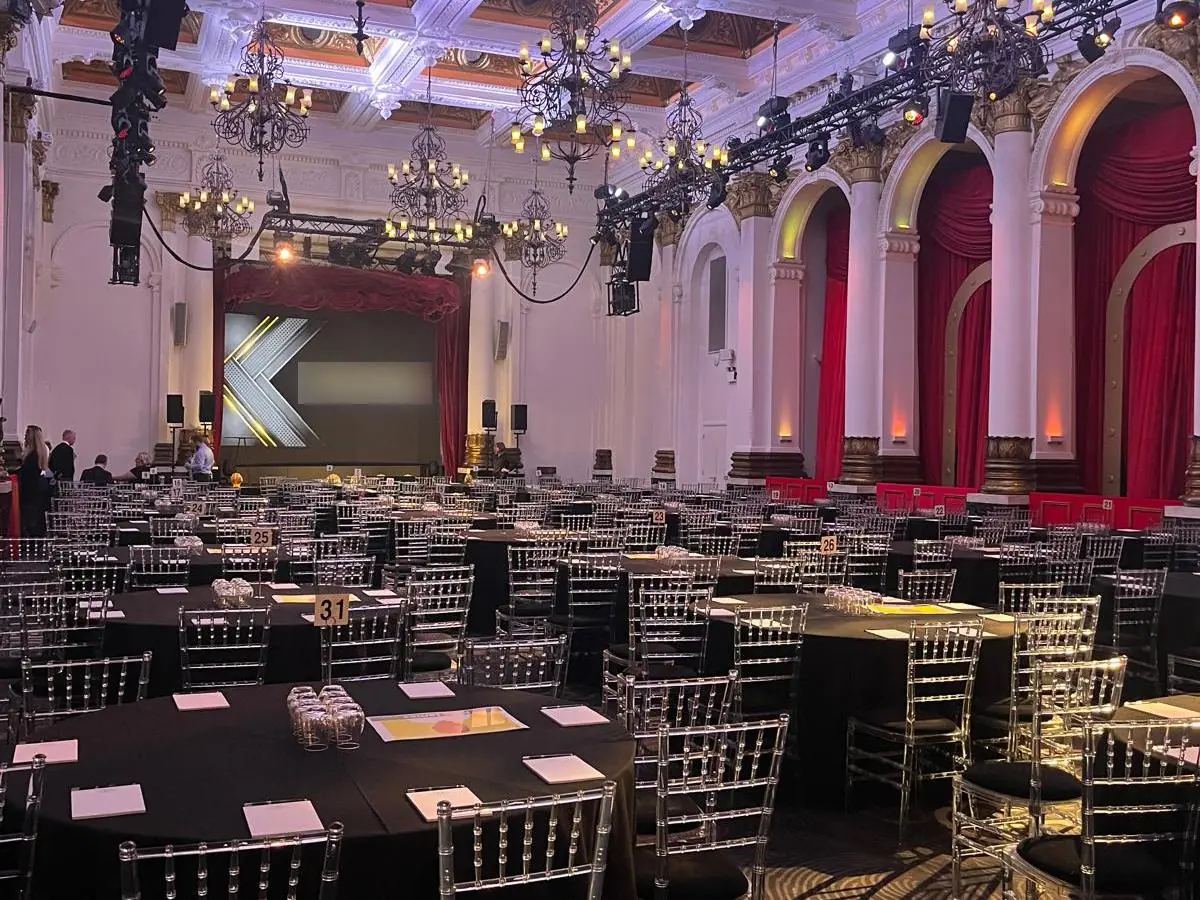
Event management is the work of delivering a specific event — the one with a date in the diary, a budget, a venue and an audience. Strategic Meetings Management is the work of deciding how your organisation handles all of them: how requirements arrive, who buys, what needs approving, and what anyone can see afterwards.
Event management asks how do we deliver this event successfully? Strategic Meetings Management asks how should our organisation manage all of its meetings and events? Confusing the two is how organisations end up with forty well-run events and no idea what they cost in total.
The difference, dimension by dimension
Scope
Event management
One event, from brief to debrief.
Strategic Meetings Management
Every meeting and event the organisation runs, treated as a portfolio.
Time horizon
Event management
The lead time of one event. It ends on the day, or shortly after.
Strategic Meetings Management
Continuous. Measured in programme years rather than event dates.
Primary objective
Event management
Deliver this event well, on budget, to the standard expected.
Strategic Meetings Management
Make the approach to meetings coherent, visible and commercially sound.
Procurement involvement
Event management
Often none, or one contract review shortly before signature.
Strategic Meetings Management
Structural. Procurement sets the route, the supplier position and the thresholds.
Data produced
Event management
A final budget reconciliation for that event.
Strategic Meetings Management
Comparable data across events — spend, suppliers, volumes, patterns over time.
Supplier strategy
Event management
The best supplier for this brief, on this brief’s merits.
Strategic Meetings Management
A managed estate, where suppliers earn a share of aggregated volume.
Governance
Event management
Whatever internal process the client has. The agency works within it.
Strategic Meetings Management
The programme defines it — policy, approvals, contracting standards.
Event delivery
Event management
The core of the job. It is what an event management team exists to do.
Strategic Meetings Management
Not automatic. A programme can source and govern without delivering anything.
Reporting
Event management
Post-event: attendance, feedback, final cost against budget.
Strategic Meetings Management
Programme-level: spend under management, supplier concentration, policy adherence.
Who typically owns it internally
Event management
Marketing, HR, an internal events team, or the department involved.
Strategic Meetings Management
Procurement, finance or a central function with a cross-department mandate.
What success looks like
Event management
The event ran well, the audience would come again, the budget held.
Strategic Meetings Management
Nothing was bought blind, everything is visible, next year’s decisions are better informed.
| Dimension | Event management | Strategic Meetings Management |
|---|---|---|
| Scope | One event, from brief to debrief. | Every meeting and event the organisation runs, treated as a portfolio. |
| Time horizon | The lead time of one event. It ends on the day, or shortly after. | Continuous. Measured in programme years rather than event dates. |
| Primary objective | Deliver this event well, on budget, to the standard expected. | Make the approach to meetings coherent, visible and commercially sound. |
| Procurement involvement | Often none, or one contract review shortly before signature. | Structural. Procurement sets the route, the supplier position and the thresholds. |
| Data produced | A final budget reconciliation for that event. | Comparable data across events — spend, suppliers, volumes, patterns over time. |
| Supplier strategy | The best supplier for this brief, on this brief’s merits. | A managed estate, where suppliers earn a share of aggregated volume. |
| Governance | Whatever internal process the client has. The agency works within it. | The programme defines it — policy, approvals, contracting standards. |
| Event delivery | The core of the job. It is what an event management team exists to do. | Not automatic. A programme can source and govern without delivering anything. |
| Reporting | Post-event: attendance, feedback, final cost against budget. | Programme-level: spend under management, supplier concentration, policy adherence. |
| Who typically owns it internally | Marketing, HR, an internal events team, or the department involved. | Procurement, finance or a central function with a cross-department mandate. |
| What success looks like | The event ran well, the audience would come again, the budget held. | Nothing was bought blind, everything is visible, next year’s decisions are better informed. |
The overlap sits in sourcing, supplier negotiation and cost control. An event team does that for one event; a programme does it once for many. The difference is the unit of work, not the level of skill.
What event management does that a programme does not
An event management team is accountable for an outcome on a specific day. It holds the run of show, the supplier call list, the contingency plan and the live budget, and it is judged on whether the room worked.
That is specialist work, and not what a meetings programme is for. A programme can define how event management is bought and what gets reported — but on the morning of a 400-delegate conference, none of that puts the AV right.
If your problem is that one particular event is complex, high-profile or beyond your internal capacity, event management is the answer and a programme would be an expensive detour. That is the dimension where the alternative wins outright.
- Briefing and concept — turning an internal objective into something deliverable.
- Sourcing for that event — the right room, caterer, production partner and accommodation.
- Budget build and reconciliation — what it will cost, and what it went on to cost.
- Logistics and production — schedules, staging, AV, signage, transport, staffing.
- [Delegate management](/glossary/delegate-management/) — registration, dietary and access requirements, check-in.
- Onsite delivery — the part nobody notices unless it goes wrong.
What a programme does that no single event can
A programme works at portfolio level. It is not trying to make one event better; it is trying to make the organisation better at commissioning, buying and accounting for all of them. One booking has no negotiating position. Forty bookings a year, visible in one place, do.
- One route in — one known way to raise a requirement instead of five. See meetings management.
- An aggregated buying position — through venue procurement and a preferred venue programme.
- Governance — a meetings policy, thresholds and a defined approval process.
- Visibility — meetings spend visibility across departments, not an invoice six weeks later.
- Reporting — meetings data and reporting procurement and finance can use.
- Supplier management — performance and relationships rather than a fresh start each time.
Where the two overlap
The overlap is larger than most comparison pages admit. A capable event management agency already does much of what a programme does — sourcing venues, negotiating rates, reviewing contracts, tracking a budget and managing suppliers.
What differs is the unit of work and the time horizon, not the sophistication. An agency does those things once per event, and the value stops when the event ends. A programme does them once for the portfolio, and the value compounds — this year’s data is what makes next year’s negotiation credible.
If you already use an agency across most of your activity, you may be closer to a programme than you think. What is usually missing is not capability but consistent data capture, a governance layer, and a mandate reaching the departments still booking on their own.
When you need both
Most organisations of any size need both, layered rather than either/or. The programme sets how meetings are commissioned, bought, approved and reported. Inside it, events get delivered — some internally, some by an event management team where scale, complexity or risk warrants it.
Eureka Events provides event management as its core business, so a programme built here can include delivery where it is genuinely needed rather than by default. A programme that insists on managing every coffee-and-biscuits training session has failed a different test.
As a hypothetical: an organisation running sixty meetings a year might route all sixty through one briefing process, with policy, approvals and data capture applied to all of them — while handing only the four or five large customer-facing ones to a full event management team. The rest run much as before, but visibly and on agreed terms. Outsourced meetings management covers how that split is usually drawn.
Which one you are probably looking for
- If you are trying to deliver a conference in eleven weeks, you want event management.
- If you are trying to find out what you spend on meetings in total, you want a meetings programme.
- If you are trying to stop five departments booking similar venues at five rates, you want meetings procurement.
- If you are trying to make one important event genuinely excellent, you want event management.
- If you are trying to answer an audit question about who approved and signed what, you want meetings governance.
- If you are trying to know where your people are on any given day, you want a programme with a duty of care layer.
- If the answer is both, and I do not know where to start, begin with is SMM right for your business?
Frequently asked questions
01Is Strategic Meetings Management just event management with more reporting?
No. Reporting is an output of a programme, not its purpose. A programme governs demand, buying and approvals across the whole portfolio — the internal training day in a syndicate room as much as the annual conference. Event management, reasonably, does not.
02Can an event management agency run an SMM programme?
Some can, and the sourcing and supplier capability transfers directly. What does not transfer automatically is the governance layer, the organisation-wide data discipline and the willingness to say a meeting should be smaller, cheaper or not happen at all. Worth asking any provider, including us: what would you report to our procurement director each quarter?
03Do we have to hand over the events we already run ourselves?
No, and most organisations do not. The point of a programme is that internally run events are still visible and still follow the same commissioning route — not that every one is handed to somebody else.
04If we need both, which comes first?
It depends where the pain is. If a specific event is imminent and at risk, deal with the event. If nobody can see the portfolio, start with the programme — delivery is easier to answer once you know what you are delivering and how often.
05We run a handful of events a year. Do we need a programme?
Probably not. Where volume is low and concentrated in one team, a programme adds process without solving anything. Good event management, and sourcing support when you need it, is the better answer. Is SMM right for your business? sets out where the line falls.
Related comparisons and reading
- 01ComparisonSMM vs venue findingThe pair most often confused in practice.
- 02ComparisonSMM vs event procurementWhere the buying discipline ends and the programme begins.
- 03The disciplineWhat is Strategic Meetings Management?The full explanation of the discipline.
- 04GuideHow to build an SMM programmeA practical sequence for putting one together.